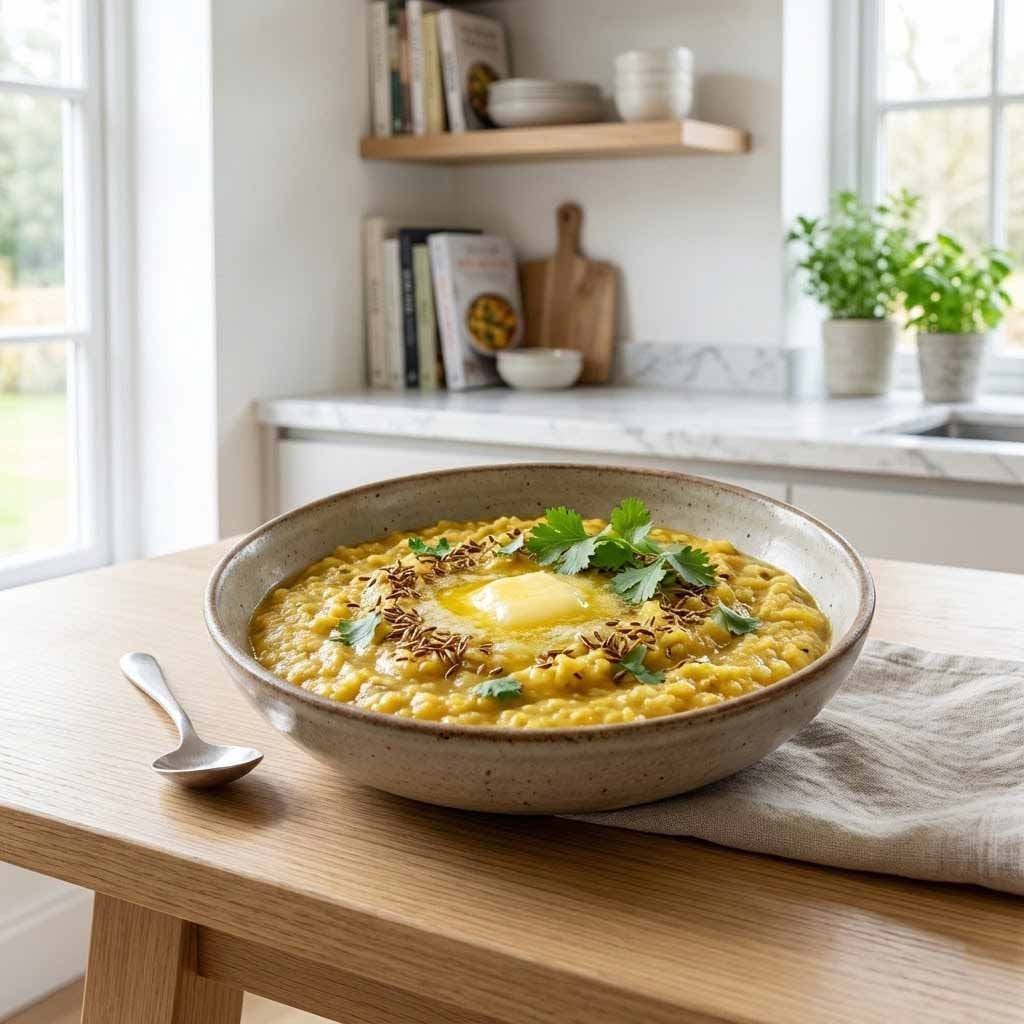
Khichdi Recipe – Traditional Indian Comfort Food Made Easy
Khichdi recipe is not just a dish. Rather, it is an emotion for Indian households. Whether you are feeling unwell, tired after a long day, or simply craving something light and comforting, Indian khichdi is always the first choice. Because it is simple, nourishing, and gentle on the stomach, it has been cooked in Indian kitchens for centuries.
Moreover, traditional Indian khichdi perfectly balances taste, nutrition, and simplicity. From khichdi for kids to khichdi for elders, and from khichdi for patients to festival khichdi, this humble meal fits every stage of life. Therefore, in this detailed guide, you will learn everything about healthy homemade khichdi, including its benefits, variations, and a clear step-by-step recipe.
What Is Khichdi recipe? – India’s Ultimate Comfort Food
Khichdi is a traditional Indian rice and lentil recipe, usually prepared using moong dal or yellow dal. It is one of the simplest and most comforting dishes in Indian cooking.
What makes the khichdi recipe special its adaptability and simplicity. It can be prepared with minimal ingredients, yet it delivers nourishment, warmth, and taste.
Because khichdi can be prepared in different ways, it suits various preferences and occasions.
khichdi can be:
- Soft or slightly grainy in texture
- Mild or mildly spicy in taste
- Plain or prepared with desi masala khichdi and ghee
As a result, it becomes khichdi Indian comfort food that everyone loves.
Additionally, rice dal khichdi is considered:
- Easy digest Indian food khichdi
- Light food khichdi
- Protein rich khichdi
- Healthy khichdi for digestion
Why Khichdi is So Popular in Indian Homes
Khichdi has earned its place as everyday khichdi because of its multiple benefits.
Key Reasons Indians Love Khichdi recipe
- Because it is one pot khichdi, cooking is effortless
- Moreover, it works well as pressure cooker khichdi
- Additionally, it can be made as instant khichdi
- As a result, it saves time and energy
- Therefore, it is ideal for busy families
Furthermore, sattvik khichdi is often prepared during fasting days and religious occasions because it is pure, light, and calming.
Health Benefits of Traditional Khichdi recipe
Because khichdi uses rice, dal, turmeric, cumin, and ghee, it offers balanced nutrition.
Health Advantages of Khichdi recipe
- Easy digest khichdi for weak digestion
- Khichdi for patients during recovery
- Khichdi for elders due to soft texture
- Khichdi for kids because it is mild and nutritious
- Protein rich khichdi from lentils
- Khichdi with ghee improves energy and gut health
Moreover, turmeric khichdi supports immunity, while cumin khichdi helps digestion.
Traditional Khichdi Recipe – Step by Step
This is a traditional cooking khichdi method that anyone can follow easily.
Ingredients for Homemade Khichdi recipe
- ½ cup rice– Provides energy and gives soft texture
- ¼ cup moong dal (yellow dal)— Add protein and thickness
- 1 tablespoon ghee– Enhance flavor and digestion
- 1 teaspoon cumin seeds (jeera)– Helps digestion and Aroma
- ½ teaspoon turmeric powder–Gives color and health benefits
- 1 teaspoon ginger paste (for ginger khichdi)
- 1–2 garlic cloves (optional, for garlic khichdi)
- Salt to taste— Balance taste
- 3–4 cups water– for proper cooking and softness
Step 1: Wash and Soak for Khichdi recipe
First, wash rice and dal together 2–3 times until the water becomes clear.
Then soak them for 15–20 minutes.
Why this step is important:
Soaking softens grains, reduces cooking time, and improves digestion. It also helps khichdi cook evenly.
Step 2: Heating desi ghee for Khichdi recipe
Place a pressure cooker or heavy pan on medium flame.
Add desi ghee and let it melt slowly.
Why desi ghee is used:
Ghee gives khichdi its traditional aroma and makes it soothing for the stomach, especially in winter.
⸻
Step 3: Adding whole spices
Add cumin seeds and let them crackle.
Then add a pinch of hing and turmeric powder.
Why spices are added first:
Heating spices in ghee releases their natural oils, which enhances flavor and makes khichdi fragrant.
⸻
Step 4: Mixing rice and dal
Drain the soaked rice and dal.
Add them to the cooker and stir gently for 1–2 minutes.
Why this step matters:
Light roasting coats grains with ghee and spices, giving deeper taste without making the dish heavy.
⸻
Step 5: Adding water and salt
Add water and salt. Mix once gently.
Why water ratio is important:
More water makes khichdi soft and easy to digest, which is the traditional texture.
⸻
Step 6: Cooking
• In a pressure cooker: Cook for 2–3 whistles
• In a pan: Cover and cook on low flame until rice and dal are fully soft
Correct texture:
Khichdi should be soft, slightly mushy, and well blended.
⸻
Step 7: Resting and final touch
After cooking, let khichdi rest for 5 minutes.
Open the lid, mix gently, and add one spoon of desi ghee on top.
Why resting is needed:
Resting helps flavors settle and improves overall taste.
Khichdi for Makar Sankranti & Festivals
In many Indian states, khichdi for Makar Sankranti holds cultural value.
Because it provides warmth and energy, it is cooked as winter special khichdi.
Additionally:
- It is offered as festival khichdi
- It is considered sacred and nourishing
- Therefore, it is cooked using traditional methods
Why Choose Raman Bihari Masale?
At Raman Bihari Masale, we believe that even simple food deserves pure spices.
Our Promise
- Freshly ground turmeric for turmeric khichdi
- Pure cumin for cumin khichdi
- Clean, aromatic spices for desi masala khichdi
Because khichdi depends on subtle flavors, quality spices make a big difference.
Therefore, choosing Raman Bihari Masale means choosing trust, purity, and tradition.
FAQs
1. Is khichdi good for digestion?
Yes, khichdi for digestion is excellent because it is light and easy to digest.
2. Can khichdi be eaten daily?
Absolutely. Everyday khichdi is safe, healthy, and nourishing.
3. Which dal is best for khichdi?
Moong dal khichdi or yellow dal khichdi is the most digestible.
4. Is khichdi suitable for sick people?
Yes, khichdi for patients is often recommended by doctors.
5. Can kids eat khichdi?
Yes, khichdi for kids is soft, nutritious, and mild.
6. Is khichdi good during fasting?
Yes, khichdi for fasting is commonly eaten in sattvik meals.
Conclusion – Khichdi, the Soul Food of India
Khichdi is more than dal rice khichdi. It is comfort, care, and tradition served in a bowl. Because it suits all ages, seasons, and health needs, traditional khichdi remains timeless.
Whether you want healthy homemade khichdi, soft khichdi, or protein rich khichdi, this dish never disappoints. Moreover, when made with pure spices, it becomes even more nourishing.